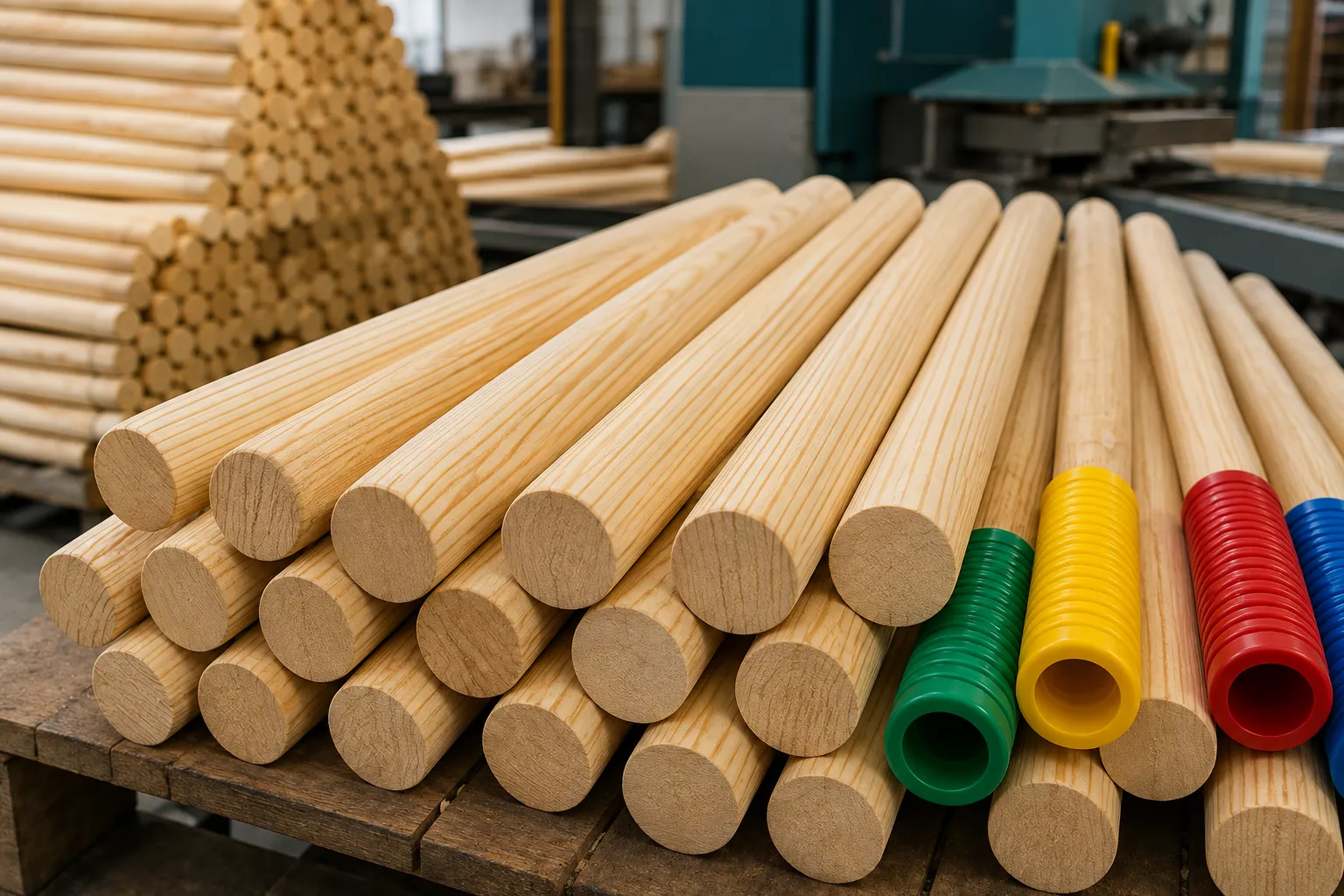
In the global wood manufacturing sector, technical specifications define the boundary between commercial success and product failure. Wooden tool handles, broom shafts, and agricultural implements face extreme environmental variations during international transit and end-use application. Cargo loaded in temperate zones may travel across equatorial sea routes before arriving in freezing northern climates. For commercial importers sourcing high-volume pine tool handles and heavy-duty broom components, understanding the physics of wood treatment and surface finishing is critical to ensuring long-term product durability.
Unprocessed wood is an active organic material that naturally absorbs and releases moisture based on ambient atmospheric conditions. Without rigorous thermal treatment and chemical-free finishing protocols, raw timber components are prone to warping, checking, splitting, and fungal growth. Below is a detailed technical examination of the essential treatment and finishing specifications governing export-quality wooden handles.
1. Advanced Kiln Drying: Moisture Content Optimization
Kiln drying is the most crucial thermal process in timber manufacturing. The primary objective is to reduce the natural moisture content of green pine wood down to a stable, equilibrium-moisture-content (EMC) suitable for destination markets.
- Cellular Moisture Reduction: Freshly harvested pine wood contains free water within its cell cavities and bound water within its cell walls. Controlled kiln drying systematically bakes out this moisture without damaging the structural cellulose matrix.
- Target Moisture Levels: Export-grade handles are processed to achieve a uniform internal moisture content between 10% and 14%. Maintaining this specific threshold prevents post-production dimensional shifting such as bowing, twisting, or cupping.
- Thermal Sterilization: The high temperatures sustained during kiln drying effectively eradicate any insect larvae, fungi, or biological spores hidden inside the raw timber, satisfying global biosecurity protocols.
2. Precision Machining and Structural Sanding Protocols
Once the timber is thermally stabilized, it undergoes high-speed mechanical profiling. Achieving a perfectly round profile with zero taper variance requires state-of-the-art milling equipment equipped with carbide-tipped cutters.
Following profiling, the wood undergoes multi-stage abrasives processing. Standard finishing sequences include:
- Coarse Sanding (80–100 Grit): Eliminates machine knife marks and levels minor surface irregularities.
- Medium Sanding (120–150 Grit): Refines the wood grain, smoothing down raised fibers.
- Fine Sanding (180–220 Grit): Produces a silky, splinter-free tactile surface that protects human hands during repetitive commercial usage.
3. Protective Coatings and Surface Treatments
Depending on the intended end-use environment—whether dry indoor floor sweeping or wet outdoor construction—handles require specific protective surface barriers:
- Natural Smooth Finish: Fine-sanded raw pine, ideally suited for economical high-volume applications where breathability and natural wood feel are preferred.
- Clear Lacquer / Varnish Coating: A thin, protective polyurethane or nitrocellulose layer that seals the wood pores. This coating provides water resistance, prevents dirt accumulation, and enhances the natural pine wood grain.
- Colored PVC Sleeving: Heavy-duty plastic heat-shrink tubing wrapped around the wooden core. This provides maximum moisture protection, chemical resistance, and color-coded identification for commercial cleaning systems.
4. Technical Integration within the Procurement Lifecycle
High-specification wood treatment must be matched with reliable factory execution and strict quality assurance. To evaluate how manufacturing specifications fit into your overall vendor selection process, read our comprehensive overview on how to identify reliable wholesale wooden broom handle suppliers.
Equally critical is preserving the condition of finished handles during ocean shipping. Moisture-treated timber can easily reabsorb ambient humidity inside shipping containers if packaging standards are neglected. For best practices on cargo protection and ISPM 15 compliance, consult our technical guide on logistics and ISPM 15 packaging criteria for large-scale imports.
Engineered Quality for Global Importers
Enforcing strict wood treatment specifications ensures that your inventory arrives in pristine condition, ready for immediate market distribution. By investing in properly dried and finished timber components, commercial buyers reduce return rates and foster long-term customer trust.
Explore our export capabilities and technical specifications by reviewing our dedicated line of Pine Broom Handles crafted specifically for international commercial trade.